
SAP EWM Basic vs. Advanced: The Difference
Embedded EWM in SAP S/4HANA: One Solution, Two Variants
In addition to being available as a decentralized warehouse management system integrated with SAP S/4HANA or SAP ERP, SAP EWM has also been delivered as Embedded EWM since SAP S/4HANA 1610 and is thus part of the standard SAP S/4HANA release. In this deployment option, SAP EWM functions largely as an integrated warehouse management solution rather than as an external system.
In the embedded version, EWM is available in two variants:
SAP EWM Basic for basic, simple warehouse operations and
SAP EWM Advanced for advanced warehouse management.
The difference between SAP EWM Basic and EWM Advanced lies in their scope of functionality and licensing: SAP EWM Basic covers core processes such as goods receipt, goods issue, inventory, and internal transfers, and is included in the SAP S/4HANA license. SAP EWM Advanced adds features such as wave processing, cross-docking, yard management, VAS, and material flow systems, and requires an additional license.
What is the difference between SAP EWM Basic and Advanced? A Comparison of Features
The SAP EWM Embedded Basic and SAP EWM Advanced differ in its range of functions and supported processes.
As the name suggests, EWM Basic covers all basic functions and processes in the warehouse, while EWM Advanced offers even more options for configuring these and further processes. Furthermore, the Advanced version allows even further and more complex processes to be covered by standard configuration.
In addition, there are more comprehensive integration options with other SAP modules and systems such as SAP Transportation Management (SAP TM), SAP PP, and MES (e.g., SAP DM), as well as options of integrating automated warehouse technology via EWM-MFS.
In the most recent version of SAP S/4HANA 2025, the functionality provided by EWM Basic and EWM Extended differs as follows:
SAP EWM Basic and Advanced at a glance
Click a function to see the details in the table.
Additional functions
Only in SAP EWM Advanced
additional license requiredExtended processes
Basic processes with Advanced extensions
additional license requiredBasic functions
SAP EWM Basic
included in S/4HANA licenseFeature comparison SAP EWM Basic vs. SAP EWM Advanced (as of SAP S/4HANA 2025)
In SAP EWM Basic and SAP EWM Advanced
Warehouse structure SAP EWM Basic: ✓ included SAP EWM Advanced: + extended
SAP EWM Basic
- Mapping of the physical warehouse structure
- Distinction of storage types by physical and functional properties (e.g. high-rack storage, block storage, reserve storage)
Additionally in SAP EWM Advanced
- Grouping of storage bins into warehouse zones (usually aisles) for route-optimized distribution of warehouse tasks
Handling units (HUs)Physical unit of packaging material and the goods it contains SAP EWM Basic: ✓ included SAP EWM Advanced: ✓ same as in SAP EWM Basic✓ same as Basic
SAP EWM Basic
- Stock management at HU level
Additionally in SAP EWM Advanced
No extension – same scope as in SAP EWM Basic.
Warehouse management monitor SAP EWM Basic: ✓ included SAP EWM Advanced: ✓ same as in SAP EWM Basic✓ same as Basic
SAP EWM Basic
- Overview of warehouse activities (open, completed and in-process activities, stock, storage bins, inbound and outbound deliveries)
- Tools for controlling and initiating actions
- Monitoring functions
Additionally in SAP EWM Advanced
No extension – same scope as in SAP EWM Basic.
Inbound processes SAP EWM Basic: ✓ included SAP EWM Advanced: + extended
SAP EWM Basic
- Processing of goods receipts from various sources (supplier deliveries, receipts from production, customer returns)
- Multi-step processing possible (unloading, quality inspection, deconsolidation, putaway)
- Time-based planning and control of activities
- Putaway strategies
Additionally in SAP EWM Advanced
- Processing of several simultaneous inbound deliveries based on transportation units (TUs) or vehicles
Outbound processes SAP EWM Basic: ✓ included SAP EWM Advanced: + extended
SAP EWM Basic
- Processing of goods issues (customer deliveries, staging for production, returns to suppliers, deliveries to internal recipients, Kanban, maintenance, service)
- Multi-step processing possible (picking, packing, staging)
- Stock removal strategies
Additionally in SAP EWM Advanced
- Waves to bundle or split picking tasks for efficient execution
Internal warehouse movements SAP EWM Basic: ✓ included SAP EWM Advanced: ✓ same as in SAP EWM Basic✓ same as Basic
SAP EWM Basic
- E.g. replenishment, warehouse reorganization, ad hoc movements
Additionally in SAP EWM Advanced
No extension – same scope as in SAP EWM Basic.
Physical inventory SAP EWM Basic: ✓ included SAP EWM Advanced: ✓ same as in SAP EWM Basic✓ same as Basic
SAP EWM Basic
- Periodic physical inventory on a key date
- Ad hoc physical inventory
- Cycle counting
- Zero and low stock checks
- Putaway physical inventory
- Recounts
- Interface for sampling-based physical inventory
Additionally in SAP EWM Advanced
No extension – same scope as in SAP EWM Basic.
Production integration SAP EWM Basic: ✓ included SAP EWM Advanced: + extended
SAP EWM Basic
- Integration with SAP PP
- Staging of components for production (e.g. via Kanban, for one or several production orders)
- Receipt of finished goods from production
Additionally in SAP EWM Advanced
- Just-in-time production (JIT/nJIT) through integration of JIT call-offs and JIT supply to production
- Management of partially finished work in process (WIP) from the MES
TM integration SAP EWM Basic: ✓ included SAP EWM Advanced: + extended
SAP EWM Basic
- Based on ASR (Advanced Shipping and Receiving)
- Leading document: freight order
Additionally in SAP EWM Advanced
- Based on transportation units (TUs)
- Control of warehouse processes based on the TM transportation plan
- Use of the warehouse as a transit warehouse for interim storage of freight
Connection of external warehouse management systemsNon-SAP systems SAP EWM Basic: ✓ included SAP EWM Advanced: ✓ same as in SAP EWM Basic✓ same as Basic
SAP EWM Basic
- Sending data (warehouse orders incl. cancellations, pick HUs)
- Receiving data (warehouse order confirmations, HU movements, blocking of storage bins)
Additionally in SAP EWM Advanced
No extension – same scope as in SAP EWM Basic.
Resource management SAP EWM Basic: ✓ included SAP EWM Advanced: ✓ same as in SAP EWM Basic✓ same as Basic
SAP EWM Basic
- Control of people and equipment that perform goods movements
- Monitoring and control of workloads
Additionally in SAP EWM Advanced
No extension – same scope as in SAP EWM Basic.
Quality management SAP EWM Basic: ✓ included SAP EWM Advanced: ✓ same as in SAP EWM Basic✓ same as Basic
SAP EWM Basic
- Integration with SAP QM
- Logistical support of quality inspections in the inbound process by processing inspection lots
Additionally in SAP EWM Advanced
No extension – same scope as in SAP EWM Basic.
KittingKit creation SAP EWM Basic: ✓ included SAP EWM Advanced: + extended
SAP EWM Basic
- Kit-to-order for outbound deliveries
Additionally in SAP EWM Advanced
- Kit-to-stock
- Reverse kitting
- VAS integration
- PP integration (for kit-to-stock) possible
AnalyticsBased on CDS views SAP EWM Basic: ✓ included SAP EWM Advanced: ✓ same as in SAP EWM Basic✓ same as Basic
SAP EWM Basic
- Analysis of workloads and work distribution, storage bin occupancy and KPIs
Additionally in SAP EWM Advanced
No extension – same scope as in SAP EWM Basic.
Only in SAP EWM Advanced
Shipping and receiving SAP EWM Basic: ✗ not included SAP EWM Advanced: ✓ included
SAP EWM Basic
Not included.
Additionally in SAP EWM Advanced
- EWM-managed transportation control and planning
- Mapping of transportation units and vehicles
Value-added services (VAS) SAP EWM Basic: ✗ not included SAP EWM Advanced: ✓ included
SAP EWM Basic
Not included.
Additionally in SAP EWM Advanced
- Execution of value-added logistics services (e.g. simple assembly, oiling)
- Control via dedicated documents at dedicated work centers
Material flow system (MFS) SAP EWM Basic: ✗ not included SAP EWM Advanced: ✓ included
SAP EWM Basic
Not included.
Additionally in SAP EWM Advanced
- Integration of automated warehouse equipment
- Various implementation options: from full control of the equipment via direct communication with the PLCs to integration of external systems with pure stock management in EWM
Merchandise distribution with transport equipment SAP EWM Basic: ✗ not included SAP EWM Advanced: ✓ included
SAP EWM Basic
Not included.
Additionally in SAP EWM Advanced
- Joint movement of several HUs with different destinations using mobile transport equipment, e.g. distribution vehicles
Package builderCreation of packages SAP EWM Basic: ✗ not included SAP EWM Advanced: ✓ included
SAP EWM Basic
Not included.
Additionally in SAP EWM Advanced
- Creation of packages from (different) products based on defined rules and restrictions
Cross-docking SAP EWM Basic: ✗ not included SAP EWM Advanced: ✓ included
SAP EWM Basic
Not included.
Additionally in SAP EWM Advanced
- Direct transfer of received goods from inbound to outbound without interim storage
- Planned and opportunistic cross-docking
Yard management SAP EWM Basic: ✗ not included SAP EWM Advanced: ✓ included
SAP EWM Basic
Not included.
Additionally in SAP EWM Advanced
- Management of arriving and departing vehicles and transportation units
- Assignment to yard bins such as doors and parking spaces
Warehouse billing SAP EWM Basic: ✗ not included SAP EWM Advanced: ✓ included
SAP EWM Basic
Not included.
Additionally in SAP EWM Advanced
- Billing of warehouse services to customers
- Billing of services provided by external service providers
- Prerequisite: SAP TM
Packing planning SAP EWM Basic: ✗ not included SAP EWM Advanced: ✓ included
SAP EWM Basic
Not included.
Additionally in SAP EWM Advanced
- Automatic planning of suitable shipping HUs for customer deliveries based on delivery and product data
Dock appointment scheduling SAP EWM Basic: ✗ not included SAP EWM Advanced: ✓ included
SAP EWM Basic
Not included.
Additionally in SAP EWM Advanced
- Planning of arrival, loading and unloading times for vehicles
- Planning of loading point capacity
- Carriers can book appointments themselves
Slotting SAP EWM Basic: ✗ not included SAP EWM Advanced: ✓ included
SAP EWM Basic
Not included.
Additionally in SAP EWM Advanced
- Automatic determination of a storage concept for the putaway of products
Labor management SAP EWM Basic: ✗ not included SAP EWM Advanced: ✓ included
SAP EWM Basic
Not included.
Additionally in SAP EWM Advanced
- Planning of working times, staff requirements and workload
- Performance evaluation
Click a function to expand it. SAP EWM Advanced always includes all functions of SAP EWM Basic. Simplified overview, as of SAP S/4HANA 2025.
How much does SAP EWM Basic cost compared to SAP EWM Advanced?
The core functionalities of SAP EWM Basic are already fully included in the SAP S/4HANA license; accordingly, there are no additional licensing costs for these features. Additional SAP EWM licenses are required for the extended functionality offered by SAP EWM Advanced. It is important to note that these additional SAP EWM licenses are required as soon as any of the Advanced features are used.
For details on licensing costs, please contact your account manager.
Which version of SAP EWM is running in my warehouse, and are we complying with the license agreements?
You define the usage mode (Basic/Advanced) in Customizing for each warehouse number under: SCM Extended Warehouse Management ➔ Extended Warehouse Management ➔ Master Data ➔ Acknowledge use of advanced functions.
You can change the usage mode at any time, for example, if the functions of SAP EWM Basic are no longer sufficient for your needs.
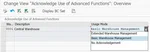
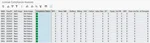
Use the /SCWM/RP_COMPLIANCE_CHECK report to verify that your Customizing settings comply with your license agreements. In addition, the report /SCWM/RP_LICENCE_ANALYSIS analyzes whether objects from Extended Warehouse Management have been used in recent months and whether their use is covered by your software license.
The self-check: Basic or Advanced in two questions
Get a first indication of whether SAP EWM Basic is enough for you. The result does not replace license advice.
Please answer both questions – the highlighted ones are still missing.
A first indication based on two questions – not license advice. Only SAP license sales can give a binding answer on licensing.
Alternatives to EWM Basic and Advanced: Stock Room Management and SAP LGM
In addition to the SAP EWM licensing options described above—the Basic and Advanced versions—SAP also offers Stock Room Management. This is the successor to the previous SAP WM under SAP S/4HANA, although SAP has discontinued some of the previous core functionalities. Compared to SAP EWM, Stock Room Management therefore has a significantly reduced scope of functionality and is particularly suitable for small, low-complexity warehouses. For example, the system supports inventory information at the storage location or storage unit level, goods receipts, goods issues, inventory counts, and internal warehouse movements, such as simple replenishment processes. Mobile devices can be integrated using RF technology or ITS Mobile. In addition, reporting functions enable monitoring of warehouse operations and provide inventory and storage location information.
The new, cloud-based transportation and warehouse solution SAP Logistics Management (SAP LGM) offers another option for warehouse management. SAP LGM has been generally available since 2026 and combines core functions of transportation management and warehouse management, positioning itself between SAP EWM and SAP TM in terms of process coverage. It is particularly well-suited for small distribution centers and satellite locations. It therefore does not replace SAP EWM or SAP TM, which offer significantly broader functional and process coverage.
FAQ: SAP EWM Basic vs. Advanced
How does Basic EWM differ from Advanced EWM?
SAP EWM Basic covers the core warehouse processes: goods receipt, goods issue, inventory, internal transfers, handling units, and the warehouse management monitor. SAP EWM Advanced builds on this and adds functions such as waves, cross-docking, yard management, value-added services, integration with material flow systems, and work management. In addition, some processes already supported in SAP EWM Basic offer a broader range of functions in SAP EWM Advanced.
Are EWM Extended and EWM Advanced the same thing?
It refers to the same thing. The product is officially called SAP Extended Warehouse Management (SAP EWM), and its two versions are called Basic and Advanced. “EWM Extended” is therefore not an official name, but it is often used to refer to the Advanced version.
Is EWM Basic included for free in S/4HANA?
SAP EWM Basic is included in the SAP S/4HANA license; there are no additional license costs for it. However, as with any other module, costs for implementation, customization, and operation still apply. Additional SAP EWM licenses are required for SAP EWM Advanced.
Can I upgrade from EWM Basic to Advanced later?
Yes. You define the usage mode in Customizing for each warehouse number and can change it at any time. The warehouse structure and processes from SAP EWM Basic remain unchanged. However, you should have the Advanced license before using the first Advanced feature.
What happens if I accidentally use an advanced feature?
As soon as you use an Advanced feature, you’ll need a license for SAP EWM Advanced. You can use the report /SCWM/RP_COMPLIANCE_CHECK to verify whether your Customizing settings are compatible with your license. Only SAP License Sales can provide a definitive clarification of what this means for your specific contract. We’d be happy to assist you with the analysis.